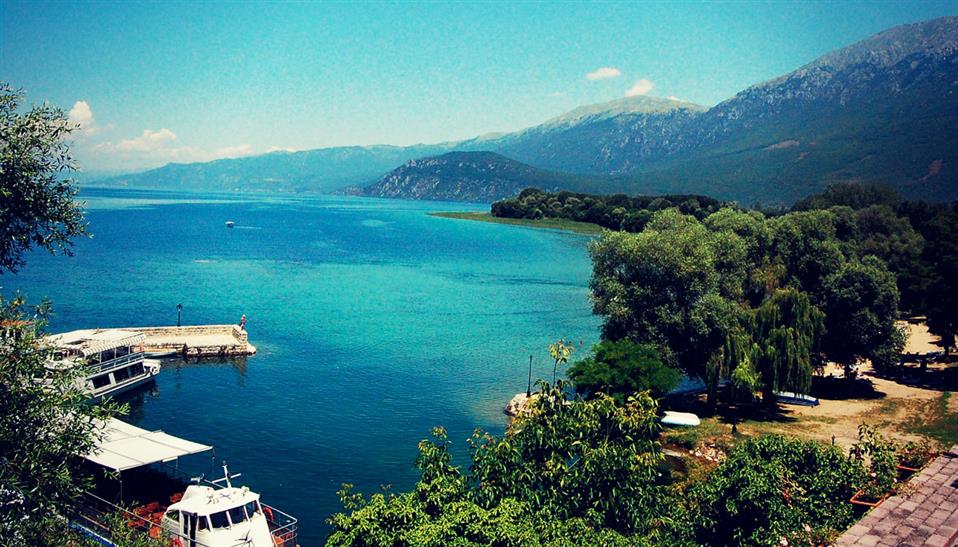
Bar represents a modern town that is every day more and more cheese. And if a port town, it is amazingly clean and has many green areas. In it there are many tourist attractions. Old Bar, Haj Nehaj fortress, whose ruins dating from the fifteenth century and the castle of King Nikola, represent the historic and cultural monuments of the city. Olives over 2000 years old and Skadar lake, with one of the biggest habitats of birds, a large number of monasteries and churches for the visitors who enjoy this type of tourism festivals and cultural events: the International TV Festival, Meetings Under The Old Olive Tree, the Bar Chronicle.
Developed beaches and coves such as Canj and Dobre Vode will make you come back to Bar.
Like most Montenegrin towns, and the bar is in its history belonged to different civilizations and cultural worlds. However, unlike other towns in Montenegro, Bar today is not only recognized by one of the worlds which is a part, sometimes for centuries was. On the legacy of an era, is being created and built up the new. In this new heritage are always clearly recognized the achievements of past.
City of olives, maritime gateway of Montenegro, ancient hearths coexistence, regardless of religion and nationality, Bar represents a combination of modernity, tradition and beauty. It is significant as a dynamic economic center of Montenegro, as well as the city has a rich cultural and historical tradition. Some of the most important civilizations range in Montenegro, were in Bar: Here are the preserved remains of the oldest written documents, here is where the most important literary and historical work of Montenegrin medieval times, the city was the seat of the oldest religious institution of Montenegro (the Bar archdiocese) . In addition, the Bar is one of the oldest olive trees in the world, old olive tree in Mirovica, more than 2000 years.
The rich cultural and historical traditions have merged in the area of Bar with unique gifts of nature, favorable climate and unique geographical location.
The pleasant Mediterranean climate attracts many tourists every year. With an average of 270 sunny days a year, Bar is one of the sunniest cities in the Mediterranean. 44 km of coastline, of which more than 9 km form the beach, 67 km of Lake Skadar and the mountain range that separates these two large bodies of water make Bar an ideal destination for tourists who want to relax on the beautiful beaches and enjoy untouched nature and for those who want to visit the many cultural and religious monuments or to spend their holidays actively engaging in numerous sports activities.
OLD CITY BAR
Old Bar is a city with over 2,500 years of existence. The Mediterranean climate, abundant water and noble field have made this area one of the oldest civilizations of the habitat of the eastern coast of the Adriatic.
Below the remnants of the old city found a multitude of fragments of pottery that date back roughly from 8th to 5th century BC, when this area was inhabited by Illyrian tribe Encheleans. Subsequent excavations revealed findings and from the Roman and early Byzantine times (3 to 5 th century AD).
In written historical sources from the IX and X century Old Town was first mentioned as Antibareos, then as Antibaris and in the eleventh century as Antibari with Emperor Constantine.
Stefan Vojislav, Prince Duklja Slovenes, 1042. god. in the area of Bara defeated the Byzantines. At the same time defeated the army of Raska, Bosnia and Hum extending their clans. Duklja became the most powerful South Slav state, and its town Bar becomes a significant cultural, economic and communications center.
The city cathedral of St. George, in 1067 Prince Mihajlo Vojisavljević was crowned king. The ancient cathedral became the temple of coronation and burial of the rulers of Duklja Dynasty Vojisavljevića.
The Catholic diocese in 1089 he received the status Duklean Archbishopric and the ecclesiastical jurisdiction of the diocese of neighboring cities and areas of Serbia, Bosnia and Travunije.
At the end of the twelfth century, the prelate of the Bar of the church, Abbot Gregory, made the "Bar Yearbook" most extensive historical work of fiction about the history of the southern Slavs.
Bar, as well as the surrounding coastal towns and areas, as in 1183 became part of the medieval state of Serb dynasty Nemanjic. In the middle of the fourteenth century Bar is ruled Zeta dynasty Balšić, and in the fifteenth century passed from hand to hand Venetians, Balšića, Despot Stefan Lazarevic, Djurdja B Rankovic and Stefan Vukčić. From 1443 belonged to the Venetian Republic. The city is then expanded, built and definitely determined system of walls, bastions and towers. It was then existed thirty Gothic and Renaissance palaces, sixteen churches and monasteries, several hundred houses and about 4000 inhabitants ...
City Bar had the statute and mint.
Turks conquered Bar in 1571, without a fight and demolition. In three centuries Bar lives as a significant furnished town with a good income from trade and agriculture (olive).
Prince Nikola Petrovic and Montenegrins liberate Bar in 1878. Semi-torn city since then ceases to live and life is slowly moving to the coast.
The walls of Bar are fully restored, as well as several important buildings in the city only.
At the remains of one of the churches is preserved and icons of St. Nicholas from the fifteenth century.
Frequent shifts of various conquerors and rulers in the region were leaving their mark, so that today we have over 30 cultural monuments. The most important is Old Bar which there are more than 2,500 years and represents a unique synthesis of Mediterranean and Orient.
It comes from the early Middle Ages. In historical sources it was first mentioned under the name ANTIVARI end of September and during the X century.
At the beginning of XI century was a significant economic, political and cultural center of the state of Zeta. In 1089 it became the seat Duklean Bar Archbishopric. The composition Nemanjas country enters 1183. In the fourteenth century the city was a free commune with the statute and mint. Bar with coastal regions in 1443 govern the Venetians and the Turks in 1571. Three centuries later, in 1878, the city liberated by Montenegrins. Destroyed the city since then cease to live.
ULCINJ
Ulcinj is located on the southern Adriatic coast with the most sunny days on the Adriatic. It has about 25,000 inhabitants, with nearly 20 km of beaches, of which 15 km of fine sand, with over 6000 h of arable land, with olive orchard with around 88,000 trees, healing properties of sand, mud and mineral sulfur water. In Ulcinj you will come across the most beautiful symphony of nature, the longest of the year bathed in the sun, the sea clean as a whistle (the cleanest sea in the world), vast sandy beaches, jungle Zović (pine trees), with plantations in the hinterland, nudist paradise "ADA"
Ulcinj is not enough to see, Ulcinj trba experience, because it is a unique example of beauty: unlimited sandy beach, sea, river, lake, mountains, lush vegetation?